How to Choose a Certified Nutrition Coach You Can Trust



Choosing a certified nutrition coach should feel less like scanning a wall of credentials and more like finding a professional who can translate nutrition science into meals, routines and decisions you can repeat. The trust test is not whether someone has strong opinions about protein, fasting or supplements. It is whether they understand your goals, stay within scope, use evidence responsibly and can coordinate with qualified clinicians when your needs become medical.
For busy San Francisco professionals, athletes, executives or anyone trying to improve health without adding another complicated project to the week, the right coach can reduce decision fatigue. The wrong one can create food anxiety, push unnecessary supplements or give advice they are not qualified to give. Use the guide below to evaluate credentials, process and fit before you commit.
What a certified nutrition coach can do, and where scope matters
A nutrition coach helps you turn general nutrition principles into realistic daily behaviors. That might include improving protein intake, structuring meals around training, building grocery routines, navigating restaurant meals, tracking patterns or staying consistent during travel and high-stress work periods.
Scope matters. In the United States, the title “nutrition coach” is not regulated the same way in every state and certification programs vary widely. Registered dietitian nutritionists complete accredited coursework, supervised practice and a national exam, which the Academy of Nutrition and Dietetics explains in its overview of the RDN credential.
A trustworthy certified nutrition coach will be clear about these boundaries instead of treating every symptom, lab value or diagnosis as a coaching problem. For diabetes, kidney disease, eating disorders, pregnancy, inflammatory bowel disease, post-surgical nutrition or medication-related nutrition questions, they should refer to or collaborate with a registered dietitian, physician or qualified medical professional.
Start with credentials, then verify how they use them
Credentials are a starting point, not a guarantee of good coaching. Some coaches complete reputable programs through fitness, nutrition or health coaching organizations. Others may have advanced degrees, personal training credentials or clinical backgrounds. What matters is not only the letters after their name but how they apply their education to your situation.
When you evaluate a certified nutrition coach, ask which program they completed, whether they maintain continuing education and how they handle questions outside their scope. A strong coach will answer plainly, not defensively.
| Trust signal | What to ask | Why it matters |
|---|---|---|
| Recognized training | “What certification or degree do you hold?” | Shows a baseline of structured education |
| Continuing education | “How do you stay current?” | Nutrition science changes and good coaches keep learning |
| Clear scope of practice | “When do you refer to a dietitian or doctor?” | Protects you from unqualified medical advice |
| Assessment process | “What do you review before making recommendations?” | Reduces generic meal plans and guesswork |
| Coaching method | “How do check-ins work?” | Reveals whether support is practical and consistent |
Be cautious if someone leans only on their physique, social media following or personal transformation story. Lived experience can make a coach empathetic, but it is not a substitute for training, ethics and professional judgment.
Look for assessment, not guesswork
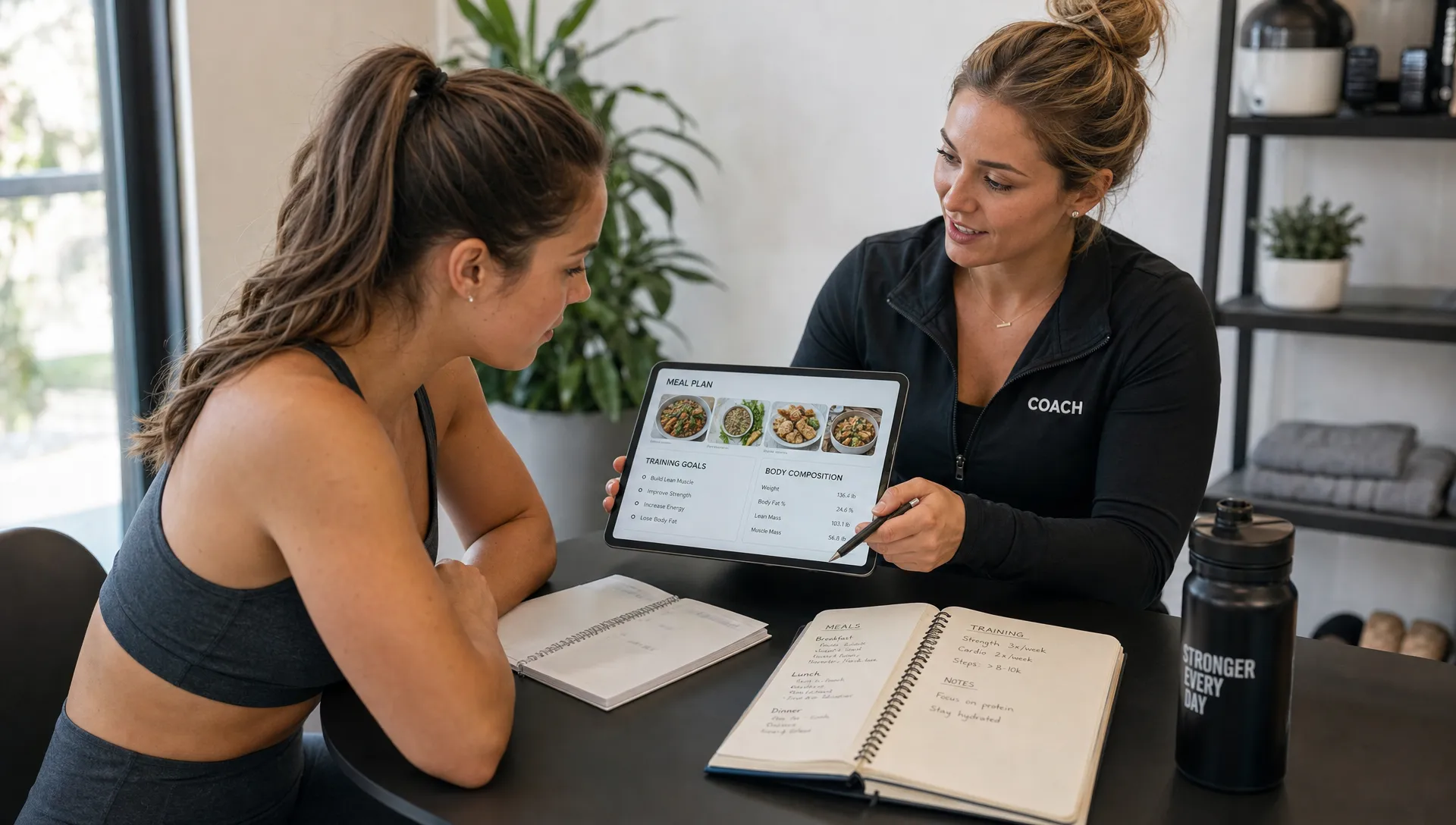
Before a certified nutrition coach suggests macros, meal timing or supplements, they should understand your baseline. At minimum, that includes your goals, schedule, food preferences, training routine, sleep, stress, medical considerations, previous dieting history and what has or has not worked before.
For body composition goals, better assessment can also include objective measures. The International Society of Sports Nutrition position stand on diets and body composition emphasizes that multiple dietary approaches can work when energy intake, protein, adherence and individual context are addressed. In other words, the “best” plan is rarely a template.
If DEXA, body fat, muscle mass or visceral fat data are part of your plan, interpretation matters as much as the scan. Custom Fit DEXA scans are performed by Registered Dietitians or Exercise Physiologists, so clients are working with professionals who understand nutrition, exercise physiology and body composition rather than simply receiving an automated scan report. That distinction is important when data is used to adjust training, protein intake, recovery or weight change goals.
Make sure the plan fits your schedule, culture and training
A certified nutrition coach who understands real life will not build your plan around an ideal week you never actually have. They should ask how often you eat out, whether you travel, what time you train, which foods matter culturally and what level of tracking feels sustainable.
For someone moving between SoMa meetings, Financial District lunches and evening workouts, a useful plan may include restaurant ordering strategies, portable breakfasts, protein targets and recovery meals that do not require Sunday meal prep for three hours. If you train hard, your coach should also understand that under-fueling can backfire by hurting performance, mood and consistency.
Small environment changes can help too. Keeping easy protein options at work, choosing a gym bag that makes training frictionless or wearing comfortable performance apparel from Cavalcade can support the habits you are trying to build. These tools do not replace coaching, but they can remove practical barriers on busy days.
If your needs have outgrown calorie tracking alone, this guide on when a personal nutritionist makes more sense than an app can help you decide whether human guidance is worth it.
Evaluate accountability, not just meal plans
Most people do not fail because they lack one more PDF of “approved foods.” They struggle because the plan does not survive work dinners, family obligations, stress, travel, soreness, poor sleep or social pressure.
The right certified nutrition coach helps you build a feedback loop. That could include weekly check-ins, habit tracking, meal photos, hunger and energy notes, training performance markers or body composition trends. A systematic review on self-monitoring in weight loss found that consistent self-monitoring is associated with better outcomes, but the best method depends on the person.
Accountability should feel structured, not punitive. A coach should help you learn from missed targets without moralizing food or turning every meal into a test. If consistency is your biggest obstacle, the role of a nutrition accountability coach is often to make the next step clearer, smaller and easier to repeat.
Watch for red flags before you commit
A certified nutrition coach should not pressure you into extreme rules or pretend nutrition is simpler than it is. Be especially careful when a coach makes large promises quickly, dismisses medical concerns or sells products as the centerpiece of the plan.
Common red flags include:
- Guaranteed fat loss, muscle gain or health outcomes by a specific date
- Detoxes, cleanses or “hormone resets” promoted as necessary for everyone
- Meal plans below appropriate energy needs without medical oversight
- Fear-based claims about entire food groups
- Supplement sales that feel mandatory or financially tied to the coach
- No intake process before giving targets
- Refusal to coordinate with your physician, dietitian or trainer
- Shame-based language about body size, discipline or food choices
A coach does not need to be perfect. They do need to be honest, evidence-informed and willing to adapt when your data, schedule or health status changes.
Questions to ask before hiring
Before you hire a certified nutrition coach, use a short conversation to test both competence and fit. You are looking for clear answers, not a sales script.
Helpful questions include:
- What certification, degree or professional training do you have?
- What types of clients do you work with most often?
- How do you assess nutrition, exercise, sleep and stress before making recommendations?
- Do you provide meal plans, habit coaching, macro targets or a combination?
- How often do we check in and what do you review during check-ins?
- How do you adjust the plan if I travel, plateau or miss a week?
- When would you refer me to a registered dietitian or physician?
- How do you protect client information and progress data?
Listen for specificity. A strong coach can explain how they think without overwhelming you with jargon. They should also be comfortable saying, “That is outside my scope,” when a question belongs to a clinician.
How Custom Fit approaches nutrition coaching in San Francisco
At Custom Fit, a certified nutrition coach may be part of a broader wellness plan that includes personal training, partner training, nutrition coaching, recovery services, DEXA scans, VO2 max testing and longevity testing. The value of that model is coordination: nutrition is not treated as a separate spreadsheet disconnected from how you train, recover or measure progress.
For clients at Custom Fit’s San Francisco studio, body composition data is handled by professionals who can place the numbers in context. Again, Custom Fit DEXA scans are performed by Registered Dietitians or Exercise Physiologists, which means clients are not left interpreting body fat, lean mass or visceral fat changes from an automated report alone.
That can be especially useful for high-performing professionals, athletes, private practice physicians and concierge medicine teams that need reliable testing and practical recommendations. Good coaching should make health decisions more precise without making daily life more complicated.
Frequently Asked Questions
What is the difference between a certified nutrition coach and a registered dietitian? A certified nutrition coach usually helps with education, habits, accountability and general nutrition strategies. A registered dietitian has clinical training and can provide medical nutrition therapy for diagnosed conditions, depending on state rules and practice setting.
How often should I meet with a certified nutrition coach? Many people benefit from weekly or biweekly check-ins at first, then less frequent maintenance once habits are stable. The right cadence depends on your goals, schedule and how much support you need between sessions.
Can nutrition coaching help with body composition? Yes, especially when coaching is paired with strength training, appropriate protein intake, sleep, recovery and objective measurement. For body composition goals, data such as DEXA can be useful when interpreted by qualified professionals.
Should my coach give me a strict meal plan? Sometimes structure helps, but strict plans are not always the best long-term strategy. A coach should match the level of structure to your preferences, health history, training demands and ability to stay consistent.
Take the next step with a coach you can trust
If you want nutrition support that connects food, training, recovery and measurable progress, start with a conversation. Ask about credentials, scope, assessment and accountability. Then choose the professional who can explain the “why,” adapt the plan to your life and refer out when your needs require a clinician.
Custom Fit offers data-driven fitness and wellness services in San Francisco, including personal training, nutrition coaching, registered dietitian support, DEXA scans, VO2 max testing and recovery programs. If you are ready for a more personalized approach, Custom Fit can help you build a plan that fits your goals and your week.