How Fitness Group Classes Keep Busy Professionals on Track
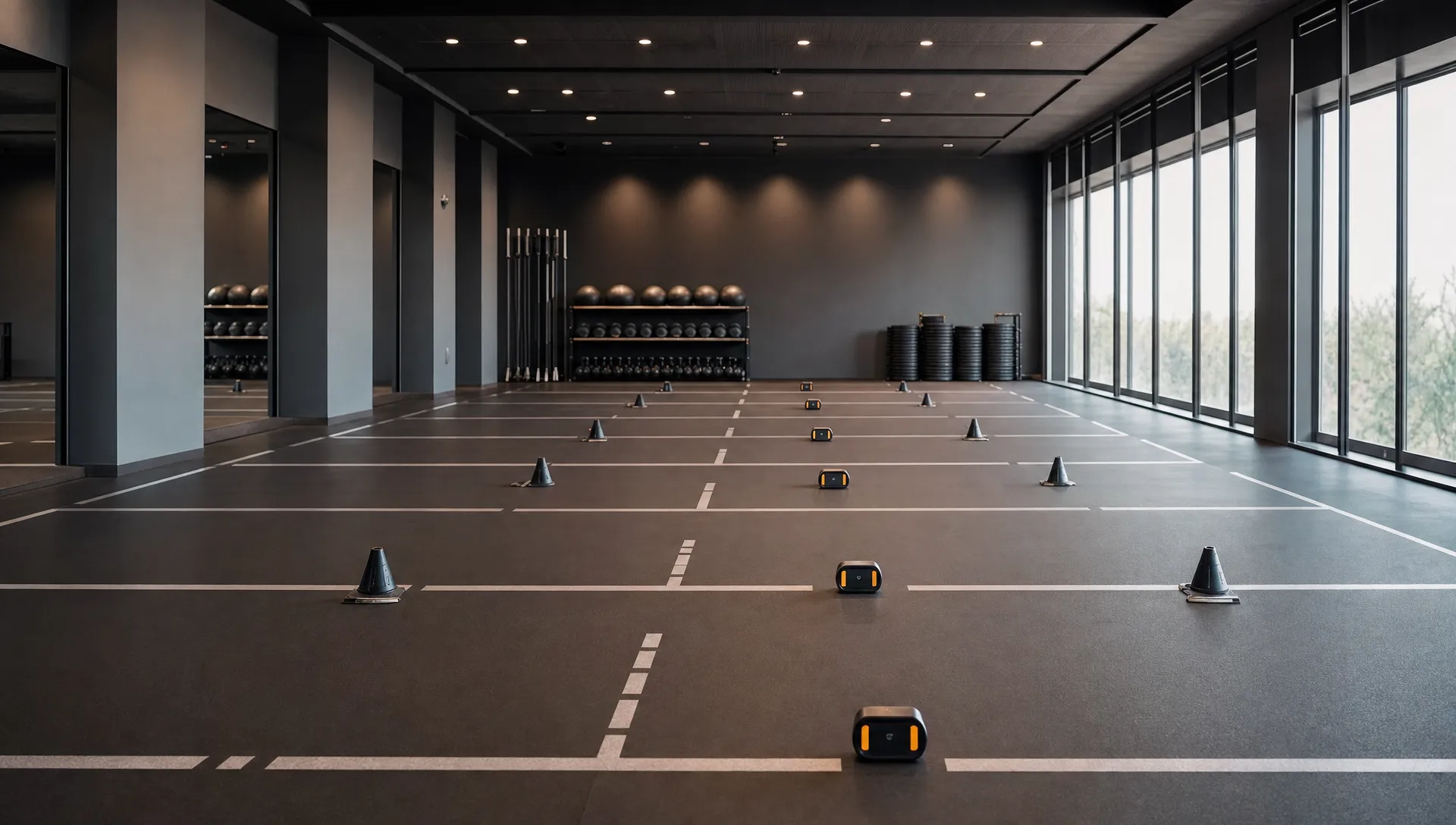


For busy professionals, the hardest part of fitness is rarely knowing that exercise matters. The harder problem is protecting the time, mental energy, and consistency required to keep showing up when the calendar is packed.
That is where fitness group classes can be surprisingly effective. A well-designed class takes a broad goal, such as getting stronger, improving conditioning, managing stress, or feeling more capable in your body, and turns it into a specific appointment with a clear start time, coach, structure, and finish line.
For high-performing professionals in San Francisco, this matters. If your day can shift because of client calls, patient schedules, board meetings, commuting between the Financial District and SoMa, or late-breaking deadlines, your fitness plan needs to be simple enough to survive real life. Group classes help because they remove friction before the workout even begins.
Why busy professionals fall off track
Most professionals do not miss workouts because they lack discipline. They miss them because each workout requires too many decisions at the worst possible time.
After a long day, you may have to decide what to train, how hard to push, which exercises to choose, how to warm up, whether you have enough time, and whether it is even worth starting. Each decision creates another opportunity to delay, negotiate, or skip.
The baseline recommendation is also more substantial than many people realize. The CDC physical activity guidelines recommend that adults get at least 150 minutes of moderate-intensity aerobic activity per week, plus muscle-strengthening activity on 2 or more days. That is achievable, but only if fitness becomes a repeatable system rather than a weekly act of willpower.
Group classes help by converting fitness into a routine that does not need to be reinvented. You know where to go, when to arrive, what will happen, and when you will be done. For someone with a demanding career, that predictability is a major advantage.
Group classes make fitness a real appointment
A vague plan like “I’ll work out sometime tomorrow” is easy to lose to a full inbox. A booked class at 7:00 a.m. or 5:30 p.m. has more weight. It becomes a fixed point on the calendar, much like a meeting, client call, or dinner reservation.
This is especially useful for professionals who live by their schedules. When a class is blocked on your calendar, you do not have to keep asking whether you have time. The decision has already been made. Your job is simply to show up.
In a city like San Francisco, time certainty matters. A professional leaving the Financial District for an evening class, or heading over from SoMa before dinner, benefits from knowing the session has a defined start and end. An open-ended gym session can stretch, shrink, or disappear. A class gives the workout boundaries.
This is one reason Custom Fit SF’s broader approach works well for people with demanding schedules. Fitness can fit into a larger system that may include personal training, nutrition coaching, recovery, testing, and classes, rather than depending on one perfect workout plan. If you want to think more deeply about the behaviors that make results sustainable, this guide to fitness training habits that deliver better long-term results is a helpful companion.
They reduce decision fatigue
Decision fatigue is one of the biggest hidden barriers to consistency. The more decisions you make during the day, the less appealing it becomes to design your own workout from scratch at the end of it.
A good fitness group class removes the need to build a session yourself. The coach has already planned the flow, sequence, intensity, and time management. You still work hard, but you are not spending mental energy on logistics.
That structure is not just convenient. It can improve effort quality. When the workout is organized, you can focus on movement, breathing, pacing, and execution. Instead of wandering between machines or repeating the same few exercises, you are guided through a session with purpose.
For busy professionals, this creates a high return on time. A 45-minute class can often be more productive than an unstructured hour in the gym because less time is lost deciding what to do next.
Accountability is built into the room
Accountability works best when it feels supportive rather than punitive. Group classes create this naturally. The coach expects you. Other regulars become familiar. The rhythm of the class becomes part of your week.
Research supports the idea that social connection and motivation matter for exercise adherence. A systematic review on self-determination theory and exercise found that feelings of competence, autonomy, and relatedness are associated with more consistent physical activity behavior. In plain English, people are more likely to keep exercising when they feel capable, have some choice, and feel connected to the environment.
Group classes can provide all three. You build competence by learning movements over time. You maintain autonomy by choosing classes that fit your goals and schedule. You gain relatedness by sharing the experience with a coach and other people who are also making time for their health.
That combination is powerful for professionals who spend much of their day making decisions, solving problems, or operating in high-pressure environments. The class becomes a place where the next step is clear, the effort is shared, and the goal is simply to be present and do the work.
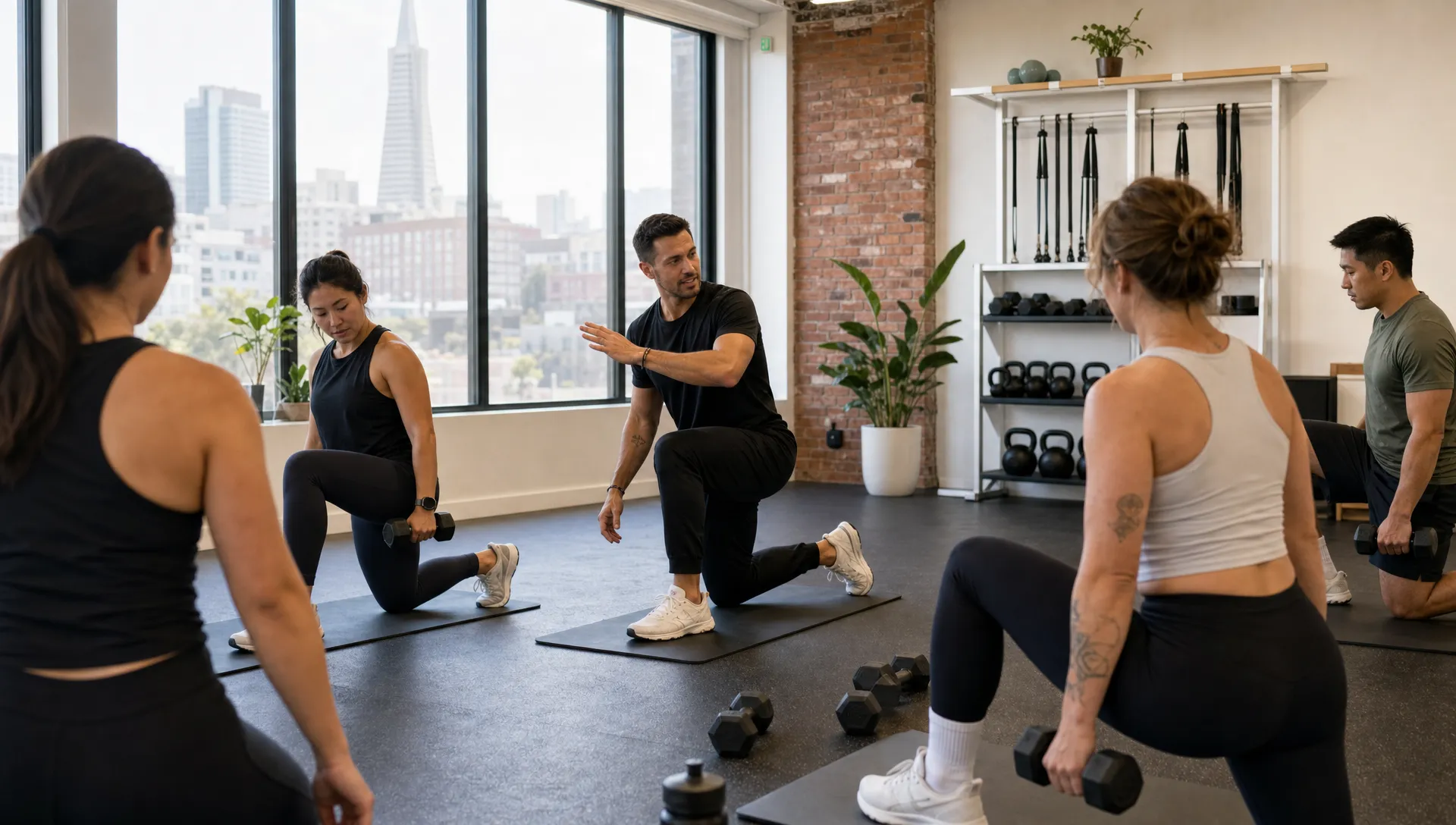
Classes support stress management, not just fitness
For many busy professionals, exercise is not only about body composition or performance. It is also a way to regulate stress, improve energy, and create separation between work and personal life.
A small study published in The Journal of the American Osteopathic Association found that medical students who participated in group exercise reported improvements in quality of life and perceived stress compared with those who exercised individually or did not exercise regularly. The study was limited in size and population, but it aligns with what many professionals experience: the group setting can make exercise feel more energizing, less isolating, and easier to repeat.
Of course, fitness is not a replacement for mental health care. If anxiety, depression, ADHD, burnout, or chronic stress are affecting daily functioning, exercise should be part of a larger support system. Multidisciplinary care models, such as comprehensive psychiatric services in NYC, show how psychiatric, psychological, and cognitive support can work alongside lifestyle habits when someone needs more than self-management.
The key is to see group classes as one stabilizing pillar. They create movement, social contact, physiological stress relief, and a predictable routine. For a professional with a demanding schedule, that can be a meaningful anchor in the week.
The best class is the one that matches your goal
Not all fitness group classes serve the same purpose. The right choice depends on what you are trying to improve and what your body can recover from.
Strength-focused classes are useful if your goal is to build muscle, improve posture, support bone health, or feel stronger in daily life. Conditioning classes can improve cardiovascular fitness and work capacity. Mobility or recovery-oriented sessions can help counteract long hours at a desk, frequent travel, and high training loads.
A balanced weekly plan often includes several training qualities rather than one type of class repeated endlessly. For many busy adults, a practical structure might include:
- Two strength-focused sessions per week
- One conditioning session per week
- One mobility, recovery, or lower-intensity session per week
- Daily walking or light movement when possible
This does not need to be perfect to be effective. The goal is to create a minimum repeatable rhythm that covers strength, cardiovascular health, and recovery without overwhelming your schedule.
If your goals include changing body composition, such as reducing body fat, increasing muscle mass, or monitoring visceral fat, it can also help to pair classes with objective testing. At Custom Fit, DEXA scans are performed by Registered Dietitians or Exercise Physiologists, which means clients are working with professionals who understand nutrition, exercise physiology, and body composition, not simply receiving an automated scan report. That professional interpretation can help you understand whether your class routine, nutrition, and recovery habits are moving you in the right direction.
How group classes and personal training can work together
Group classes are excellent for consistency, energy, and weekly rhythm. Personal training is useful when you need more individualization, coaching detail, or progression.
For example, a professional who is returning after a long break may use personal training to rebuild technique and confidence, then add classes for weekly volume. Someone training for a demanding event may use classes for conditioning while using one-on-one sessions to address strength, mobility, or movement quality. A person with limited training time may combine both to make sure every session has a purpose.
This pairing is especially useful for people who want structure without losing personalization. Group classes make the habit easier to keep. Personal training helps refine the plan so the effort is directed toward the right outcomes. If you are weighing the best mix, Custom Fit’s article on how fitness and personal training work better together breaks down that relationship in more detail.
How to stay consistent when work gets chaotic
Even the best routine needs a backup plan. Busy professionals should assume that some weeks will be messy. The solution is not to abandon the routine, but to define what “staying on track” means during a difficult week.
A practical consistency strategy includes three levels:
- Ideal week: Attend your planned classes and complete your full schedule.
- Busy week: Keep your highest-priority 2 classes and maintain daily walking.
- Crisis week: Complete one class or one short coached session to preserve the habit.
This approach prevents the all-or-nothing cycle. Missing one class does not mean the week is ruined. It simply means you adjust and protect the next best action.
Professionals often succeed when they stop treating fitness as a test of motivation and start treating it as infrastructure. The same way you build systems for work, finance, travel, or patient care, you can build systems for health. Group classes are one of the simplest pieces of that infrastructure because they make the next step obvious.
What to look for in a professional-friendly fitness class
A class for busy adults should do more than make you sweat. It should be organized, coached, appropriately challenging, and repeatable.
Look for classes with clear instruction, thoughtful programming, and coaches who can help you modify movements when needed. The environment should make it easy to arrive, train, and leave feeling like the session was worth the time. The best classes combine intensity with intelligence, so you are building fitness rather than just accumulating fatigue.
You should also consider how the class fits into your broader health picture. If you are also working on nutrition, recovery, strength goals, metabolic health, or longevity, a studio that can connect those pieces may offer more value than a class-only model.
For some professionals, the answer may be mostly group classes. For others, it may be a combination of classes, personal training, nutrition coaching, recovery services, and testing. If you are deciding how much support is worth it for your schedule and goals, this article on whether personal training is worth it for busy professionals can help clarify the tradeoffs.
Frequently Asked Questions
Are fitness group classes effective for busy professionals? Yes. Fitness group classes are effective because they create structure, reduce decision fatigue, and turn exercise into a scheduled appointment. For busy professionals, that makes consistency easier than relying on unstructured workouts.
How many group fitness classes should I take per week? Many adults do well with 2 to 4 classes per week, depending on goals, training history, recovery, and schedule. A balanced plan usually includes strength, conditioning, and mobility or recovery-focused work.
Can group classes help with weight loss or body composition? They can support weight loss and body composition goals when combined with appropriate nutrition, recovery, and consistency. Objective testing, such as a professionally interpreted DEXA scan, can help track changes in muscle mass, body fat, and visceral fat more accurately than scale weight alone.
Should I choose group classes or personal training? It depends on your needs. Group classes are great for consistency and energy. Personal training is better for individualized coaching, technique, progression, and specific goals. Many busy professionals benefit from combining both.
Build a fitness routine that fits your professional life
If your schedule is demanding, your fitness plan should not depend on perfect motivation. It should be structured, efficient, and easy to repeat.
Custom Fit SF helps professionals build that kind of system through personal training, fitness group classes, nutrition coaching, recovery services, and advanced testing. If you want a smarter way to stay consistent and make your training fit your life, explore Custom Fit SF and find the support that matches your goals.