6 Fitness Programs That Work for Demanding Schedules
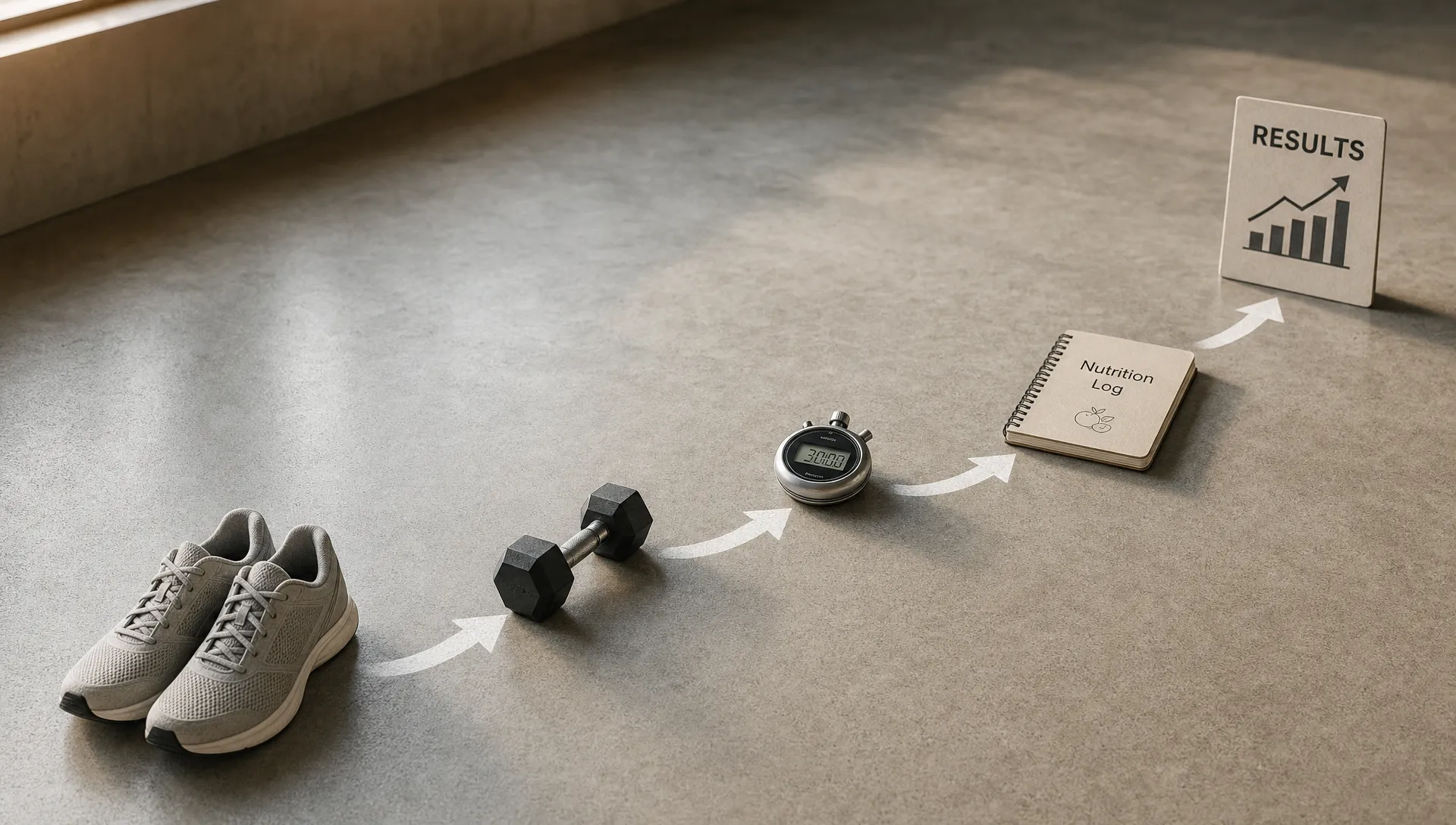


A demanding schedule does not make fitness impossible. It makes the wrong fitness program impossible.
For high-output professionals, physicians, founders, parents and frequent travelers, the problem is rarely motivation. The problem is friction: too many decisions, vague goals, long workouts, slow feedback and plans that fall apart the first week a calendar gets crowded.
Effective fitness programs for demanding schedules share a few traits. They are measurable, repeatable, time-efficient and flexible enough to survive a difficult week without turning into an abandoned plan.
The World Health Organization recommends that adults aim for aerobic activity plus muscle-strengthening work each week. That does not mean every workout needs to be long. A good program helps you distribute the right work across the week in a way you can actually maintain.
What makes a fitness program work when time is limited?
Before choosing a program, look for structure. A busy person does not need a menu of endless options. You need a small number of high-value actions that match your goal, your current fitness level and your real schedule.
Strong fitness programs for demanding schedules usually include:
- A clear weekly minimum that keeps progress moving even during busy periods
- Strength training because it supports muscle, metabolism, bone health and long-term function
- Cardiovascular work scaled to your fitness level and available time
- Recovery practices that reduce soreness, fatigue and injury risk
- Objective tracking, such as strength numbers, conditioning benchmarks, DEXA scans or VO2 max testing
- Professional guidance when the stakes are high or time is scarce
If your day involves back-to-back meetings in the Financial District, patient care, family logistics or a late commute through Hayes Valley, the best plan is the one that removes guesswork before the week begins.
| Fitness program | Best for | Typical weekly structure | Main benefit |
|---|---|---|---|
| Two-day strength program | People with very limited time | 2 focused sessions | Maintains and builds lean muscle |
| Personal training program | Professionals who want accountability | 1 to 3 coached sessions | Efficient technique, progression and planning |
| Partner training | Couples, colleagues and friends | 1 to 2 shared sessions | Accountability with personalization |
| Group class program | People who need schedule structure | 2 to 4 booked classes | Consistency and lower decision fatigue |
| VO2 max guided cardio program | Performance and longevity-focused clients | 1 to 3 conditioning sessions | Better cardiovascular fitness in less time |
| Testing plus recovery program | Data-driven clients and executives | Periodic testing plus recovery sessions | Smarter training decisions and better sustainability |
1. The two-day strength program
A two-day strength program is one of the best starting points for people whose calendars are unpredictable. It is not flashy, but it gives you the highest return on time when designed well.
Each session should focus on large movement patterns: squat or lunge, hinge, push, pull, carry and core stability. Instead of doing a long list of exercises, the program prioritizes movements that train multiple muscle groups at once. A 45 to 60 minute session can be enough when rest periods, exercise selection and progression are planned carefully.
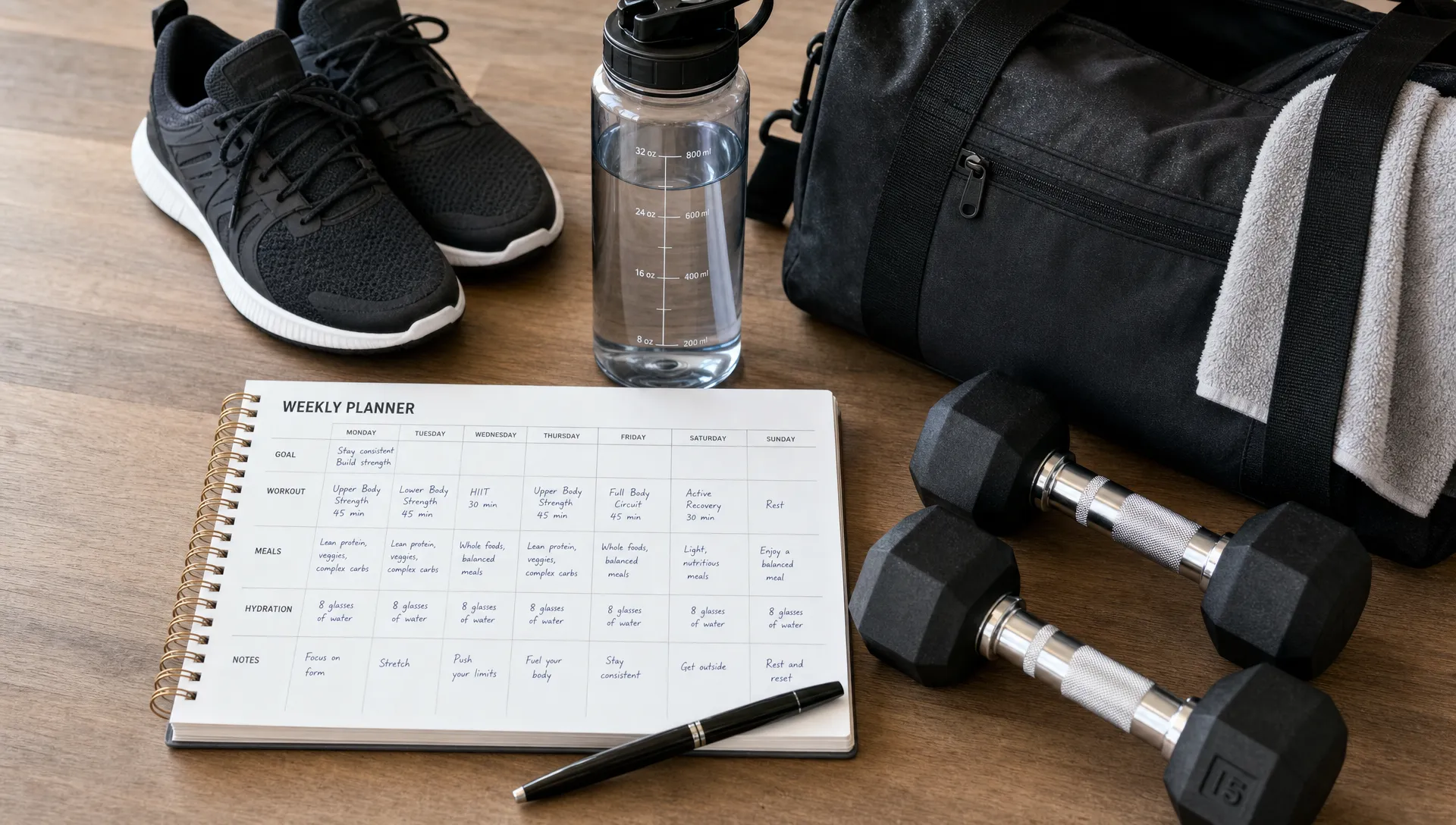
This format works especially well for busy adults because missing one day does not ruin the week. If Monday gets taken over by work, you can train Tuesday and Friday. If travel interrupts your routine, you can complete one full-body session and maintain momentum.
Strength training deserves priority because muscle is not just an aesthetic goal. A 2022 meta-analysis in the British Journal of Sports Medicine found that muscle-strengthening activities were associated with a lower risk of all-cause mortality, with benefits observed even at modest weekly volumes.
For a demanding schedule, the goal is not to do everything. The goal is to do the most valuable things consistently. If you need a broader framework for building your week, Custom Fit’s guide to building a personal fitness program you can stick to walks through the fundamentals without overcomplicating the process.
2. The appointment-based personal training program
Personal training works for busy people because it turns exercise into a scheduled commitment, not a hope. It also compresses the learning curve. When time is limited, spending months guessing at technique, intensity or program design is expensive in its own way.
A strong personal training program should start with an assessment. That may include movement quality, injury history, goals, lifestyle constraints, strength baselines and recovery capacity. From there, each session can be built around what matters most, whether the priority is fat loss, muscle gain, mobility, bone health, energy or performance.
For high-income professionals and physicians, the biggest advantage is cognitive relief. You do not have to write the workout, decide how heavy to lift, wonder whether your form is right or adjust the plan after poor sleep. A coach handles the structure so you can focus on execution.
This type of program is also useful when the cost of injury is high. If your work requires long hours standing, operating, traveling or seeing patients, poor technique is not just a gym problem. It can affect your day.
At Custom Fit, personal training can also be paired with nutrition coaching, recovery services and testing. That matters because a demanding schedule often creates multiple bottlenecks at once: inconsistent meals, poor sleep, stress, limited movement and under-recovery.
3. The group class program that lives on your calendar
Group classes can be highly effective for busy professionals when they are treated like meetings. You choose the time, book the class and remove the daily debate about what workout to do.
The main benefit is consistency. A class gives you a start time, an end time, a coach and a plan. That structure reduces decision fatigue, which is one of the hidden reasons many fitness routines fail.
The best group class program is not simply the hardest class you can find. For demanding schedules, it should fit into a balanced week. A smart mix might include strength-focused classes, conditioning, mobility and lighter sessions when stress is high. If every class leaves you wrecked for two days, the program may be entertaining but it is not sustainable.
Custom Fit has written more about why fitness group classes help busy professionals stay on track, especially when consistency is the main obstacle.
Group classes are a strong fit if you like energy, accountability and a defined schedule. They are less ideal if you have complex injuries, highly specific performance goals or need close technique coaching every session. In those cases, combining classes with occasional personal training can give you both structure and individual attention.
4. The VO2 max guided cardio program
Cardio is often the first thing busy people skip because it can feel time-consuming. A VO2 max guided cardio program solves that by making conditioning more precise.
VO2 max is a measure of how much oxygen your body can use during intense exercise. It is commonly used as a marker of cardiovascular fitness. For people interested in longevity, energy and performance, it can be a useful baseline because it helps answer a better question than “Did I sweat?” The better question is, “Is my cardiovascular system improving?”
A VO2 max guided program might include a mix of zone-based aerobic work and short higher-intensity intervals. The exact mix depends on the client’s baseline, health history, training age and recovery capacity. Some people need more low-intensity aerobic work. Others may benefit from carefully dosed intervals.
Short, vigorous movement can matter. A 2022 Nature Medicine study on vigorous intermittent lifestyle physical activity found that brief bursts of vigorous activity were associated with lower mortality risk in non-exercisers. That does not mean every busy person should jump into maximal intervals, but it supports the broader point: conditioning can be broken into smaller, well-planned doses.
For demanding schedules, a realistic cardio plan might include two 25 minute sessions per week plus one longer walk or low-intensity session. The value of VO2 max testing is that it makes those sessions more targeted. Instead of guessing at intensity, you train with a clearer understanding of your current capacity.
5. The body composition and longevity testing program
Many busy professionals track weight because it is easy. The problem is that weight alone is a blunt tool. It does not tell you whether you are gaining muscle, losing fat, carrying more visceral fat or changing in ways that support long-term health.
A body composition program uses objective testing to guide decisions. DEXA scans can provide insight into lean mass, fat mass, bone density and visceral fat. For clients focused on longevity, performance or metabolic health, that information can shape the training and nutrition plan more intelligently than the scale alone.
Custom Fit DEXA scans are performed by Registered Dietitians or Exercise Physiologists. That distinction matters. Clients are working with professionals who understand nutrition, exercise physiology and body composition, not simply receiving an automated scan report. A qualified professional can help interpret what the results mean and how to adjust training, protein intake, calorie targets or recovery based on the data.
This program works well for demanding schedules because it creates feedback loops. If a client is training twice per week and making nutrition changes, periodic testing can show whether the plan is producing the intended outcome. If lean mass is not improving, the program may need more progressive strength training or better protein distribution. If visceral fat remains elevated, nutrition, stress, sleep and conditioning may need closer attention.
Testing does not replace consistent habits. It makes those habits smarter. For executives, clinicians and longevity-focused clients, that distinction is important because time is limited and the margin for wasted effort is small.
6. The recovery and nutrition-supported fitness program
A demanding schedule does not only limit workout time. It also limits recovery. Travel, late meals, poor sleep, alcohol, stress and long workdays can all reduce the quality of your training response.
A recovery and nutrition-supported program treats the workout as one part of the system. The goal is to make training sustainable enough that you can repeat it for months, not crush yourself for two weeks and stop.
Nutrition coaching can help busy clients solve practical problems: protein at breakfast, business dinners, meal timing around training, hydration, travel days and realistic calorie targets. Recovery services can support mobility, soreness management and readiness for the next session.
This type of program is especially valuable for people who have tried intense fitness programs before but struggled with consistency. Often, the missing piece is not effort. It is recovery capacity. If your plan ignores sleep, stress and nutrition, it may work only during unusually calm weeks.
When evaluating a facility, look for a recovery environment that connects back to your training goals. Custom Fit’s article on choosing a recovery gym that supports better training explains why recovery should not be treated as a luxury add-on. It should support the next workout.
How to choose the right program for your schedule
The best choice depends on your constraint. If your main issue is lack of time, start with two full-body strength sessions and short conditioning. If your issue is lack of consistency, group classes or partner training may help. If your issue is uncertainty, personal training and testing can give you a clearer plan.
Use these questions to narrow the decision:
- Do I need accountability, personalization or both?
- Is my main goal fat loss, muscle gain, performance, longevity or pain-free movement?
- How many weekly sessions can I protect even during a difficult week?
- Do I need objective testing to know whether the program is working?
- Would I be more consistent alone, with a coach, with a partner or in a group?
For many busy people, the answer is a hybrid. Two personal training sessions, one short cardio session and nutrition support may be enough to create meaningful change. Another person may do two group classes, one strength session and periodic DEXA or VO2 max testing. The right program is the one that matches your biology and your calendar.
Frequently Asked Questions
How many days per week should a busy person work out? Many people can make progress with 2 to 4 well-planned sessions per week. The key is matching the program to your goal, then protecting a realistic minimum even during busy weeks.
Are short workouts actually effective? Yes, when they are structured. Short workouts work best when they focus on compound strength movements, targeted conditioning or mobility that supports your overall plan.
Should I choose personal training or group classes? Choose personal training if you need individual coaching, injury-aware programming or a highly specific plan. Choose group classes if you need schedule structure, energy and accountability. Many busy professionals benefit from combining both.
How often should I do DEXA or VO2 max testing? Frequency depends on your goal and training phase. Many clients use testing periodically to check whether their plan is changing body composition, cardiovascular fitness or other measurable markers in the right direction.
What is the best fitness program if I travel often? A hybrid program usually works best. Build around two anchor strength sessions when you are home, then use short hotel-room workouts, walking, mobility and nutrition targets while traveling.
Build a program that fits your real life
A demanding schedule does not require a watered-down fitness plan. It requires a smarter one.
Custom Fit combines personal training, partner training, group classes, registered dietitian-led nutrition coaching, DEXA scans, VO2 max testing, recovery programs and memberships in a data-driven environment. If you want a plan that respects your calendar and still pushes you toward measurable results, explore Custom Fit’s San Francisco fitness and wellness services.