Healthspan vs. Lifespan: The Metric That Actually Matters


Healthspan vs. Lifespan: The Metric That Actually Matters
The average American lives to approximately 76 years. The average American spends roughly the last 16 of those years managing at least one chronic disease — heart disease, diabetes, cancer, cognitive decline, or some combination.
That means the question of how long we live and the question of how well we live for most of that time are different questions with different answers. Lifespan — the total number of years — has increased steadily over the past century, driven largely by improvements in acute care, sanitation, and the treatment of infectious disease. Healthspan — the number of years spent in good health, with full function and without significant disease burden — has not kept pace.
The gap between the two is where most of what matters actually happens.
What healthspan means
Healthspan is a straightforward concept with a deceptively difficult definition. The most useful version: the period of your life during which you are free from serious chronic disease and maintain sufficient physical and cognitive function to live the way you choose.
That last clause matters. Healthspan is not simply the absence of a diagnosis. It is the presence of capacity — the physical strength to do the things you want to do, the cardiovascular fitness to sustain effort without limitation, the metabolic health to support energy and cognitive clarity, the skeletal integrity to stay mobile and independent, and the mental sharpness to engage with the world fully.
Most people do not spend the last decade or two of their lives with all of those capacities intact. The goal of healthspan optimization is to extend the period during which they are — and compress the period of functional decline into as small a window as possible at the end of life. The term for this is "squaring the curve": a long plateau of health followed by a short, steep decline, rather than a long, gradual slope.
Why lifespan is the wrong target
Optimizing for lifespan alone — pursuing interventions specifically aimed at maximum longevity regardless of functional status — produces a deeply unattractive outcome in many cases. A longer life spent in poor health, with limited mobility, cognitive decline, or chronic pain, is not a goal most people actually want when they examine it directly.
This is why the longevity medicine field has largely shifted its framing from lifespan to healthspan. The interventions that extend healthspan — maintaining cardiorespiratory fitness, preserving muscle mass, controlling visceral fat, keeping metabolic markers in a healthy range, protecting bone density and cognitive function — also tend to extend lifespan. The reverse is not reliably true. Lifespan-focused interventions that don't improve function do not necessarily improve quality of life.
The practical implication: if you're going to invest time and attention in your health, the metrics worth optimizing are the ones most strongly associated with staying functional, capable, and free of chronic disease for as long as possible. Not just staying alive.
What actually predicts healthspan
The research on longevity and healthy aging has identified a relatively consistent set of variables that are most strongly associated with healthspan outcomes. Most of them are measurable. Most of them are modifiable.
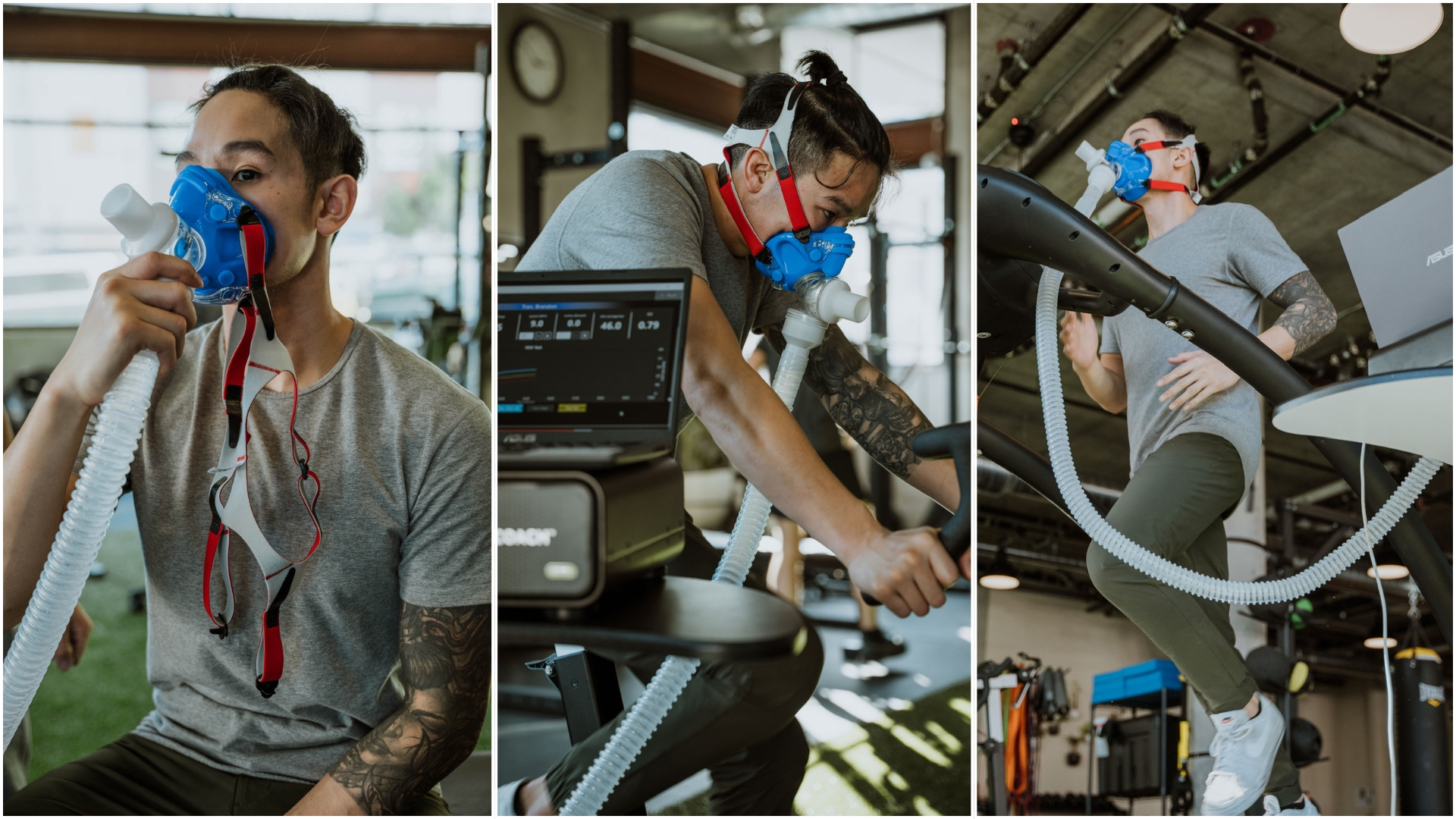
Cardiorespiratory fitness. VO₂ max is one of the single most reliable predictors of all-cause mortality and functional capacity in aging populations. Higher VO₂ max at any age is associated with lower rates of cardiovascular disease, cognitive decline, and overall mortality. Crucially, it responds to training — improving VO₂ max at 50 or 60 produces measurable healthspan benefit.
Muscle mass and strength. Sarcopenia — the age-related loss of muscle mass — is one of the primary drivers of functional decline. Grip strength and lower body strength are among the most robust predictors of mortality in older adults. Preserving and building lean mass through consistent resistance training is one of the highest-leverage healthspan interventions available, and it is one that most people underinvest in until function is already declining.
Body composition, specifically visceral fat. Visceral fat is not a cosmetic concern. It drives systemic inflammation, disrupts insulin signaling, and elevates risk for cardiovascular disease, metabolic syndrome, and type 2 diabetes — all conditions that significantly shorten healthspan. Managing visceral fat through nutrition, training, and sleep is a direct investment in metabolic longevity.
Metabolic health markers. Insulin sensitivity, blood sugar regulation, inflammatory markers, and cardiovascular lipid markers (including ApoB and Lp(a)) collectively describe the metabolic environment in which your organs and cells are operating. A favorable metabolic environment is associated with reduced risk of the chronic diseases that most commonly end healthspan. Tracking and managing these markers proactively — before they cross clinical thresholds — is the difference between a reactive and a proactive approach to aging.
Bone density. Falls and fractures are among the leading causes of hospitalization and functional decline in older adults. Osteoporotic fractures — preventable with adequate bone density maintained through loading, nutrition, and monitoring — represent one of the clearest failure modes in late-life healthspan. Building and preserving bone density through the 30s, 40s, and 50s is an investment with a 20-to-30-year payoff horizon.
Sleep and stress. Chronic sleep insufficiency and unmanaged psychological stress accelerate virtually every aging mechanism: inflammation, cortisol dysregulation, insulin resistance, cognitive decline, immune suppression. They are not soft variables — they are upstream drivers of the hard physiological markers that determine healthspan.
The measurement problem
Most people have no precise sense of where they stand on any of the variables above. They know approximately how much they weigh. They may know their cholesterol number from a recent physical. Beyond that, the actual state of their cardiorespiratory fitness, body composition, metabolic markers, and bone density is unknown.
This is not a personal failing — it reflects the fact that the healthcare system is not structured to measure these things proactively. The standard annual physical was designed to detect disease that is already present, not to comprehensively assess the variables most closely tied to how well someone will age over the next 20 or 30 years.
The consequence is that most people are making decisions about their health — about their training, their nutrition, their recovery — without the data those decisions should be based on. They are optimizing by feel rather than by measurement.
What a measurable approach to healthspan looks like
Measuring healthspan isn't complicated. It requires knowing your numbers across the variables that matter — and then tracking them over time to confirm that your interventions are moving them in the right direction.
At Custom Fit, that measurement layer is built around four tests:
A DEXA scan establishes your body composition baseline — lean mass, visceral fat, body fat distribution, and bone density. A VO₂ max test measures your cardiovascular fitness. An advanced bloodwork panel covers the metabolic, inflammatory, hormonal, and nutritional markers most closely associated with chronic disease risk and healthspan outcomes. And genetic testing maps the predispositions that make all the other results more interpretable for your specific physiology.
Together, these four assessments answer the question most people are actually asking when they think about their health: not "am I sick" but "am I on a good trajectory." That is the question that matters for healthspan. And it is only answerable with data.
The Longevity Blueprint includes DEXA, VO₂ max, advanced bloodwork, and your choice of Nutrigenomix genetic testing or Vault Kinetics strength testing in one coordinated assessment, with a registered dietitian review that translates the data into a specific, actionable plan — not a generic set of recommendations, but a roadmap built around your actual numbers.
Healthspan is not a given. It is something you build, maintain, and measure — ideally long before it becomes urgent.
Start with the Longevity Blueprint.
Testing and assessment at Custom Fit is for health optimization and performance purposes and is not a substitute for primary care or medical diagnosis.